Saturday, August 15, 2015


Thursday, May 21, 2015
Wishing For A Kinder Reality
It’s 1963
and I am lost at Wheaton Plaza, an open-air shopping center in Suburban,
Maryland. A curly-haired charmer with big green eyes and wanderlust, I recall
the hazy image of an exterior walkway, the hems of grown-up dresses and the
particular scents of Kresge’s stale popcorn, Hahn’s leather shoes and Fannie
May’s mint meltaways. One moment my tiny fingers are clutched safely and a bit
too tight inside my parent’s hand. Moments later, I’m tugging those fingers
free. Hard to believe my highly over-protective mother let go long enough for
me to toddle away, so maybe she didn’t?
One older
sister said my father had sole charge of me that day as he shopped for winter
coats; the other assures me no major decision such as a winter coat purchase
would have been undertaken without my mother.
I was
fifteen when Sheila and Katherine Lyon, aged twelve and ten, walked to my Wheaton
Plaza on a spring break Tuesday. It was a day without pencils or teachers, a
day for a jaunt to the mall. They were seen at the Orange Bowl eating pizza
sometime midday and didn’t make it home for curfew, nor for evening television,
Happy Days perhaps, or Good Times.
Both blonde
and blue-eyed, younger sister Katherine had short hair and wore a red jacket,
bell-bottom blue jeans and a bracelet with “Kate” spelled with black letters on
white beads. Pigtailed Sheila wore round wire rims, a dark blue sweatshirt and
wheat-colored corduroy pants. Their schoolgirl faces were plastered on flyers,
network news and in The Washington Post
for months afterward.
Our middle-class
suburban world doled out taut leashes overnight. No more walks to Peoples Drug
or roaming the creek behind Stoneybrook park. No more dashing out after
breakfast and high-tailing it home in time for dinner. “Do you want to end up
like those Lyon sisters?” my father would say.
As time passed,
we’d occasionally ask, “Do you think we’ll ever find out who took those girls? Do
you think they’re still alive?” And then we’d return to our lives, perhaps
thinking about the sisters again when we read about other missing children,
like Adam Walsh or Amber Hagerman, or Laura Lippman’s What the Dead Know, a novel inspired by the Lyon sisters’ story.
Sheila’s and
Katherine’s bodies have never been recovered. I think about their hands, so
little at the time, smooth and young, ring-less, perhaps. Maybe they’d painted
glitter polish on their nails. Their parents are still living, still waiting. Their
brother, fifteen when they disappeared, later became a police detective.
At the time,
a witness reported seeing two bound girls in a station wagon. In February, 2014, NBC Washington, D.C. reported that police made a break in this forty-year-old case and identified a “person of interest,”
a man currently in prison for multiple sex offenses. A ride operator at
shopping center carnivals, Lloyd Lee Welch (aka Michael) was seen at Wheaton
Plaza the day the Lyon girls went missing. A police sketch circulated at the
time bears a remarkable likeness to him.
Last September, Huffington Post reported that another lead had surfaced. And in February, the publication reported the police were closer to solving the case. Police searched land in Virginia owned by a new suspect, the
ride-operator’s uncle. Richard Allen Welch, Sr. was a former security guard at Wheaton
Plaza. Turns out, the person who saw the girls in the back of the station wagon
was carnie Michael Welch, who admits to riding in the car with them and later
witnessing his uncle molesting one of the girls. If Sheila’s and Katherine’s
bodies are found on that remote mountain land, I hope they scratched glittered
nails across their abductor’s face.
When my own
son began to walk, I clutched his hand though malls and stayed within ten feet
of him on playgrounds. Protective, yes, but by then not considered overly so.
As a parent, the possibility of outliving a child guts me, worse if at the
hands of a stranger.
Whenever I
see a toddler with no guardian in sight, I wait at the sidelines until an adult
shows up, wary of possibly being considered suspect. Did an alert adult take my
hand and lead me to safety in 1963? Did someone look the other way as an
offender snatched the Lyon girls? Why them and not me? No doubt the same
thought haunts others who once wandered unchaperoned through Wheaton Plaza that
day.
I’m quite
enthralled with the idea of alternate timelines, a la Sliding Doors. I like to think the Lyon girls slipped into a kinder reality, where that evening they snuggled next to their parents for Happy Days and, years later, clutched tighter
to their own children’s hands.
UPDATE: Closure for the Lyon family, in July Washington Post reported that Lloyd Lee Welch, sex-offender and former carnival worker, charged with Lyon sisters' murder.
Thursday, February 26, 2015
A woman named Joan
 |
| Crafts by the other Joan |
 |
| Wheaton High drill team 1978 |
Many people dislike their own names, but I’ve always loved
mine. There were no other Joans in any of my grade school classes as far as I’m
aware and I didn’t know any in college. The famous Joans were gutsy or clever
or fun or, in some cases, all three. Saintly badass d’Arc comes to mind, as do Plowright,
Fontaine, Crawford, Rivers, Collins and Cusack. Joan Jett apparently rocked my
high school, but before my time. And of course the brilliant Didion, whose
prose I discovered late, which means there’s more for lucky me to read.
The mom of my
dearest friend of forty years was gutsy and
clever and fun. A transplanted
New Yorker, she was coifed and on-the-go to Mahjong or Wednesday bowling with wine-colored
lip liner, blue-shaded eyes and appliquéd jackets. During junior high and high
school, it was this mom who buoyed me when my own high-strung and detached
mother was unapproachable.
 |
 |
| Parade day |
She kissed me as if I were her own child, locked eyes when
asking a question, nodded and smiled as she got the answer. She crafted spirit
gifts long before today’s high school football and cheerleading moms were born,
wrote poetry that gave us courage to march and shake to a 70’s beat while
hundreds of our peers looked on, inspired my stubborn self to perform in 20-degree
parades and remembered everything – birthdays, pom-pom routine songs, favorite
candies.

She was a vibrant and caring role model for her three
children, inspiring smiles and warm hearts, facing medical challenges with steadfast fortitude. She was a supportive wife to
a man with whom she shared an infinite
optimism and energy and devoted daughter to her mother (called Nana), whom
she called every day without fail, and father, who at 77-years-old was among
the hundred hostages in the 1977 B'nai B'rith headquarters takeover. When she
became a nana, her joy multiplied—by seven.

 |
| Joan and Karen, captain and co-captain |
Thursday, February 5, 2015
Sound claustrophobia
The sounds start harmless enough. Coughs, throat-clearing, nose-blowing, the
crunching of apples. Later there will be a morning check-in with the wife and
kids, and a quartet of blubbery sneezes, followed by harmonized giggles from a
bookkeeping duo. In the afternoons, there’s a flurry of not-so-hushed personal
calls and a heated talking-down from project leader to a team member who hasn’t
delivered a deliverable.
 |
| Japanese Gardens, Portland, Oregon, photo by Rick Mora |
 When I’m not writing, I hire out as a contract accountant. For the last year
I’ve been working with a client on a long-term project, but this is the first
time in my $%#*!!&? years that I’ve worked in a cubicle. Yes, I understand
the cost savings of a footprint with cubes versus individual offices. But surely
productivity has suffered. I’d like to see the numbers on that.
When I’m not writing, I hire out as a contract accountant. For the last year
I’ve been working with a client on a long-term project, but this is the first
time in my $%#*!!&? years that I’ve worked in a cubicle. Yes, I understand
the cost savings of a footprint with cubes versus individual offices. But surely
productivity has suffered. I’d like to see the numbers on that.
Most days my earphones are looped over my ears, blaring instrumentals such as
the themes from Game of Thrones, Lord of the Rings or Last of the Mohicans on Pandora, but sometimes even
those masterpieces don’t drown it all out. Lately, I’ve alternated between the
soundtrack and live scores of Les Miz, but often this leaves me in a weepy mess
as each note returns me, thunderstruck and emotional, to a stall in a London
theater.
Such a noise fiasco would torture most introvert writers (aside from maybe Jane Austen, who apparently wrote in a noisy room, with siblings, nieces and nephews carrying on around her.) But being crushed by noise from all sides ignites in me a sort of sound claustrophobia. Sometimes I clap my hands over my earphones, nod my head on the desk, take deep breaths and think of Japanese Gardens, my peace on earth.
Such a noise fiasco would torture most introvert writers (aside from maybe Jane Austen, who apparently wrote in a noisy room, with siblings, nieces and nephews carrying on around her.) But being crushed by noise from all sides ignites in me a sort of sound claustrophobia. Sometimes I clap my hands over my earphones, nod my head on the desk, take deep breaths and think of Japanese Gardens, my peace on earth.
But it’s not all gloom and noisy
doom – I’m taking notes and culling idiosyncrasies. Sound brings life to the
pages of a story and many of these characters will show up in a book one day.
Sunday, April 13, 2014
Monday, March 3, 2014
Art in Fiction
Today's memorable passages are inspired by my post on What Women Write, talking about capturing life in fiction.

“—if a painting really works down in your heart and changes the
way you see, and think, and feel, you don’t think, ‘oh, I love this picture
because it’s universal.’ ‘I love this painting because it speaks to all
mankind.’ That’s not the reason anyone loves a piece of art. It’s a secret
whisper from an alleyway. Psst, you. Hey kid. Yes you.”

“He
must have driven this way countless times, and yet he had no memory of the
scenery. He must have been so caught up in the day's agenda, and arriving
punctually at their destination, that the land beyond the car had been no more
than a wash of one green, and a backdrop of one hill. Life was very different
when you walked through it.”
Friday, February 14, 2014
Memorable passages
When I started reading e-books on my iPad, I noticed sentences
and paragraphs underlined in dots. An e-reader feature that confused me when I
first saw it, I learned those dots indicated passages that readers often highlighted. Passages
that perhaps defined a character or touched on the book's theme (or both). But also, passages that spoke directly to me, the reader, provoking two words to flash across my mind. Yes,
this.
 So every once in a while, I’m going to share some of my
favorites. Hope the words seep into your world as they have mine. And to start, what better than a passage about words?
So every once in a while, I’m going to share some of my
favorites. Hope the words seep into your world as they have mine. And to start, what better than a passage about words?"There is something about words. In expert hands, manipulated deftly, they take you prisoner. Wind themselves around your limbs like spider silk, and when you are so enthralled you cannot move, they pierce your skin, enter your blood, numb your thoughts. Inside you they work their magic."
Friday, October 4, 2013
Back to Italy
I've read two lovely novels recently that brought me back to gorgeous Italy, the backdrop for the first chapters of The Lost Legacy of Gabriel Tucci.
Christopher Castellani's A Kiss From Maddalena

From the air, the village of Santa Cecilia appears in the shape of a woman lying down. If you’d been a pilot flying over it—on your way to Germany of Africa or some other place to drop bombs—you’d have noticed how the main road forms a kind of spine leading to a round piazza, where green trees fan out like hair over the hills, and four narrow roads grow into limbs at both ends. One of the woman’s arms cradles a cluster of white stone houses; the other stretches lazily into fields, in a way that suggests she is resting. Her legs straddle farms and orchards and a few scattered vineyards. She bends her knee at a curve just before an olive grove. If you’d been a pilot—young, maybe, one of the thousands of boys soaring over every week—you’d have had a woman’s figure on your mind anyway, and you’d have longed to land in this place, to hide with her from Hitler and Russia and the passo romano, and to lose yourself in the parts of her body you can only see up close.
In this brilliant passage, we are transported to an Italian village on the cusp of war. In the spring of 1943, most of the men have gone to fight. Except Vito, who falls obsessively in love with Maddalena, the youngest daughter of a prominent family. Vito caters to his mentally ill mother, is gangly and goofy, and thought of as a mama's boy. Maddalena is young, naive and unsure of her life's direction, but falls for Vito's sensitivity and kindness.
She has gumption and determination, and is perhaps more inclined to love him because her family considers him a joke. When war intervenes, her family flees to the country while he stays in the village. Both are changed by war and on her return, she must choose love or family obligation. A bittersweet tale of love, sacrifice and duty, A Kiss From Maddalena is a masterfully written and stunning novel.
She has gumption and determination, and is perhaps more inclined to love him because her family considers him a joke. When war intervenes, her family flees to the country while he stays in the village. Both are changed by war and on her return, she must choose love or family obligation. A bittersweet tale of love, sacrifice and duty, A Kiss From Maddalena is a masterfully written and stunning novel.
Pamela Schoenewaldt’s When We Were Strangers

Another beautiful opening:
I come from the village of Opi in Abruzzo, perched on the spine of Italy. As long as anyone remembers, our family kept sheep. We lived and died in Opi and those who left the mountain always came to ruin. “They died with strangers, Irma,” my mother said over and over in her last illness, gasping between bouts of bloody coughing that soaked our rags as fast as I could clean them. “Your great-grandfather died in the snow with Frenchmen. Why?”
Irma Vitale is a young Italian seamstress at the end of the nineteenth century. With her mother gone and her father drinking too much, she leaves her beloved Italian village and sails across the ocean, hoping to find a new life in America and her older brother in Cleveland. But the voyage is rough; she is beaten and robbed, learning quickly to trust no one. Arriving in New York, she scrapes together enough money to eat and hop a train west.
In Cleveland she finds not her brother, but unexpected friendship. Yet tragedy finds her again. Encouraged by a caring woman offering medical treatment to immigrants, Irma transforms her pain into a determination to help others. No longer a shy, guarded girl, she develops into a strong, courageous figure whose heart and resolve would make her mother proud.
The characters were richly drawn and Schoenewaldt weaves conflict and tension masterfully, with gritty details of what life was really like for immigrants during this tenuous time in America's history.
Wednesday, September 11, 2013
A Constellation of Vital Phenomena: A Novel

To prepare for our 2013 summer spontaneity tour, I packed hardbacks and paperbacks, downloaded e-books to my iPad and audio books through Audible. Between books, journals and even an author talk, I had a literary and adventurous five weeks.
A few days ago I finished Anthony Marra's brilliant A Constellation of Vital Phenomena. I'd started listening to it on audio before we left and while we traveled, stole minutes on a beach walk and in the car.
Marra's debut is an intense novel with stunning language that deserves a careful read. From the first sentence, "On the morning after the Feds burned down her house and took her father, Havaa woke from dreams of sea anemones," I was immediately catapulted to war-torn Chechnya. By the end of the first page I gasped out loud at both the images laid out before me and the language that painted the scene.
Marra's characters are damaged beyond belief, flawed and real and searching for truth. There's Havaa, the child who carries a suitcase full of souvenirs she might one day need, Sonja, the doctor who runs a bombed-out hospital and is obsessed with finding her disappeared sister, and Akhmed, a man who wants to save Havaa from the men who took her father. There are others, too, a writer whose son has betrayed his village, a nurse with a sharp wit and evil tongue, and a wife on the brink of madness.
This multi-layered tale of survival and betrayal has received stellar reviews, bookseller recommendations and interviews, made several bestseller lists and the 2013 Flaherty-Dunnan First Novel short list.
This is one of my favorite reads this year.
Monday, June 10, 2013
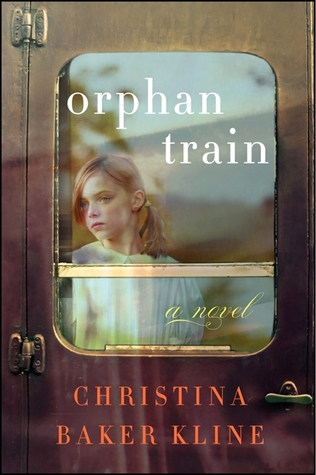
Christina Baker Kline's Orphan Train
I've read a number of great books lately, gearing up for my next story which takes place in Depression-era Richmond and Washington, D.C., by way of New York City.
Here's my review of Christina Baker Kline's beautiful novel Orphan Train.

Here's my review of Christina Baker Kline's beautiful novel Orphan Train.
Tuesday, April 2, 2013

One of my favorite audio books, narrated by the wonderful Jim Broadbent. A perfect combination of stellar writing and spot-on delivery. In case you missed it, here's a link to my interview with the lovely author Rachel Joyce on What Women Write.
Wednesday, October 17, 2012
Julie and I were star-struck last week at the Dallas Museum of Art. We both agreed, Chris Cleave writes stunning, raw novels and knows how to entrance a crowd. I'm blogging about our night over at What Women Write.
Cleave was gracious and engaged with each of us who waited to meet him. If you haven't read his books, I highly recommend. Just look at these covers...

If you want to read the first chapter of Incendiary, click here...
Here's what the author has to say about Gold...

My first introduction to Cleave was reading Little Bee. This first page blew me away...

Cleave was gracious and engaged with each of us who waited to meet him. If you haven't read his books, I highly recommend. Just look at these covers...

If you want to read the first chapter of Incendiary, click here...
Here's what the author has to say about Gold...


Friday, September 28, 2012
A Night to Remember
How lucky am I? I wasn't up for an award, but I didn't care!
I'm blogging over at What Women Write about my night at the Emmys.

I'm blogging over at What Women Write about my night at the Emmys.

Wednesday, September 5, 2012
Put a writer in a car for a week and see what happens...
I'm up again on What Women Write, the blog I share with five other fabulous women writers.
I'm up again on What Women Write, the blog I share with five other fabulous women writers.
 |
| Sunset at Laguna, photo by Rick Mora |
 |
| Austin at Zion, photo by Rick Mora |
Monday, August 6, 2012
Sunday, June 17, 2012

Over at What Women Write, I confess, I love majestic cathedrals. I also share a bit about my inspiration for writing The Lost Legacy of Gabriel Tucci.
Monday, May 21, 2012
John Irving's Dallas stop
What happens when John Irving shows up in conservative Dallas to speak about his new novel, In One Person?
He gets a warm welcome and an entranced audience. I was lucky enough to be there. Check out my thoughts over at What Women Write.
He gets a warm welcome and an entranced audience. I was lucky enough to be there. Check out my thoughts over at What Women Write.
Monday, April 16, 2012
Change is good

What happened on a spur of the moment writing retreat? I spotted these lovely birds, stuck my toes in the Pacific and came away with a refreshed, revised and rockin' new Chapter One!
Check out my latest on What Women Write...

Wednesday, February 29, 2012
Sarah McCoy on What Women Write

Hey authors, ever feel like a clone of yourself would help you out in a big way? Me, too!
Today Sarah McCoy leaves us wondering over at What Women Write!
Here we are at A Real Bookstore in Fairview, Texas.

Monday, February 6, 2012
Common Link

You never know unless you ask. Downton Abbey and sharing a love of literature on What Women Write today.
Subscribe to:
Posts (Atom)